As a developing economy, India has numerous developmental aspirations. How India meets these goals without worsening the climate crisis is at the heart of CSTEP's work. Addressing climate change and enabling a secure and sustainable future for Indian citizens require an overhaul of previous paradigms on development and resource utilisation. This is reflected in our work on developing low-carbon trajectories for development with an emphasis on nature-based solutions.
We are working with state governments across India to build capacity on risk and vulnerability assessments to inform their respective action plans on climate change. The transition from fossil fuels to renewable energy is crucial to achieving a secure and sustainable future. CSTEP's studies explore the possibility of a greater integration of renewables in the energy sector.







Air quality, emissions, and source contributions analysis for the Greater Bengaluru region of India
•Review of the air quality data and studies for the city of Bengaluru, India.
Studies for the Government of Karnataka
1. Sustainable Urban Planning Strategies for Cities in Karnataka
Source Apportionment Study for the City of Bengaluru
CSTEP has initiated a source apportionment (SA) study for Bengaluru as per the request of the Government of Karnataka.
The main goal of the study is to provide evidence towards creating a Clean Air Action Plan for Bengaluru and implementing strategies for improving air quality.
Breathe Easy: To Avoid a Repeat of New Delhi 2017, Look at the Small Picture
It is obvious that we cannot continue in a business-as-usual scenario; however, it is also important to remember that measures previously put in place have not always worked. It is important to undertake science and evidence based policy changes. Scientic data about pollution sources and contribution will help in framing credible and implementable policies.
Developing a Clean Air Action Plan for Patna
CSTEP has developed a Clean Air Action Plan (CAAP) for the city of Patna. The plan has identified a set of implementable control measures that are technically and economically feasible, towards improving Patna's air quality, in consultation with policymakers and stakeholders.
The official report by CSTEP, containing complete details of CAAP, can be accessed by clicking on the Download Document button on the right.
SANITECH - A platform for Integrated Sanitation Investment Planning
CSTEP developed SANITECH, a decision-support tool, to facilitate an integrated approach to the sanitation investment planning process for urban local bodies in India. The tool is envisioned to provide stakeholders information on existing and new technologies in a manner that allows them to compare options, assess cost/benefits and make informed decisions.
A Spatial Data System for the Inclusive Cities Agenda
CSTEP seeks to develop a proof-of-concept, scalable model of a community-owned and managed spatial data system that can aid policy and programming efforts towards meeting SDG targets (such as promoting inclusive urbanisation and equitable access to water, sanitation and health).
The project hopes to achieve the following outcomes:
Intersectionality-Informed Framework for Implementation of Effective Gender Mainstreaming in WSH: Andhra Pradesh
CSTEP, in collaboration with the Administrative Staff College of India (ASCI) and Centre for Advocacy and Research (CFAR) aims to strengthen agencies and advance policies, regulations, and processes for increased accessibility to Water, Sanitation and Hygiene (WSH) services. The project will demonstrate an inclusive and implementable framework that looks at the cumulative impacts of different social factors (gender, age, ability, socio-economic class, etc.) and their interactions on access to adequate sanitation across the value chain.
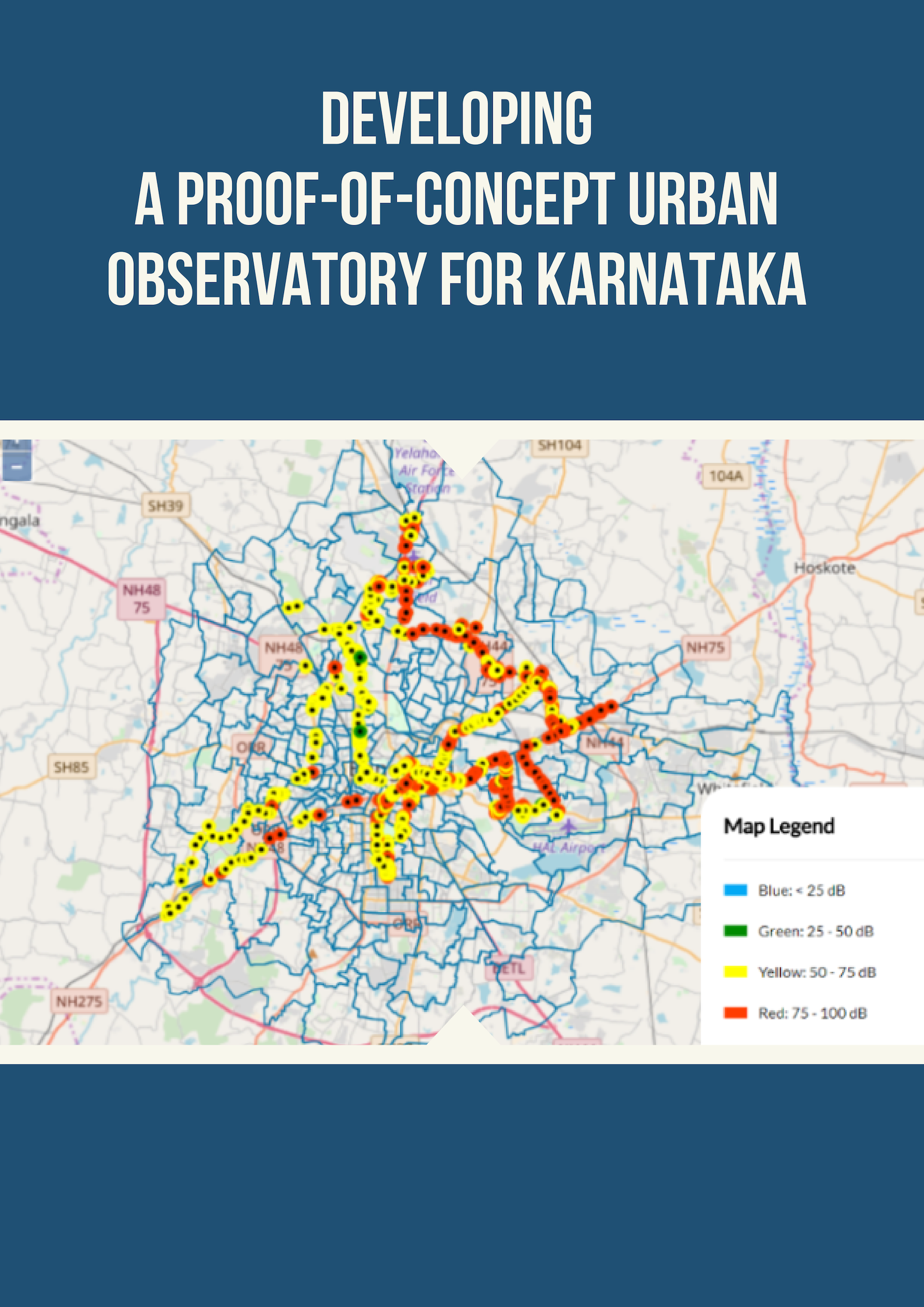
Developing a Proof-of-Concept Urban Observatory for Karnataka
The objective of the project was to build a Proof of Concept (PoC) of an Urban Observatory platform for Karnataka, which can carry out geo-spatial data analyses and visualisation to enable data-driven decision-making.
Benefit Cost Analysis of Emission Standards for Coal-based Thermal Power Plants in India
In December 2015, the MoEFCC notified emission standards for limiting Sulphur Oxides (SOx), Nitrogen Oxides (NOx), Particulate Matter of size <10 µm (PM10) and Mercury (Hg) emission